Eyeliner Tattoo
Fast Facts
Cosmetic tattoos generally require two sessions to create a base. After that, maintenance touch-up’s are recommended every 2 to 3 years to keep the colour looking fresh. All services are paid per session. Prices do not include applicable tax: 5%GST.
What is an Eyeliner Tattoo?
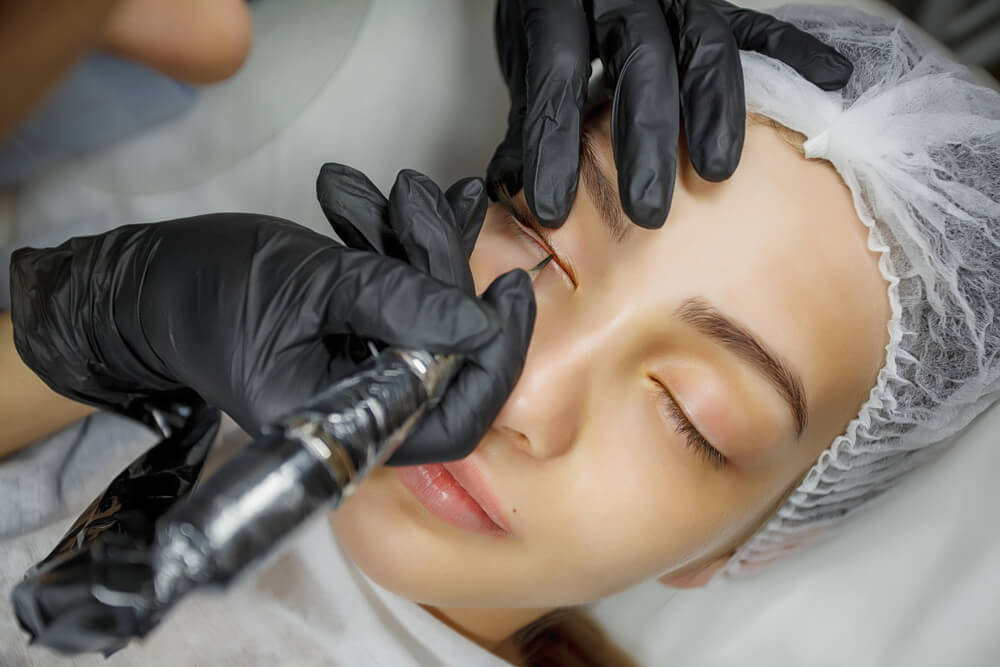
Struggling to perfect your eyeliner every morning? An eyeliner tattoo can simplify your routine! Using a cosmetic tattoo machine with a single-use disposable needle, we insert pigment along your lash line to create a flawless eyeliner look that lasts 3-5 years, depending on aftercare and lifestyle. You can choose from various styles, such as bold wings, subtle lash enhancements, or smoky effects in different colors. It’s perfect for defining your lash line and saving time on makeup. Suitable for all skin types.
Who’s it for?
The perfect candidate for eyeliner tattoo is someone who:
Wants to simplify their makeup routine: Ideal for those who want to save time by having perfectly applied eyeliner without the daily effort.
Seeks long-lasting eyeliner: Perfect for individuals looking for a semi-permanent solution that can last 3-5 years.
Has difficulty applying eyeliner: Great for those who struggle with shaky hands, poor vision, or other challenges that make applying eyeliner difficult.
Wants to enhance their lash line: Suitable for those looking to define or enhance their lash line for a more polished or dramatic look.
Is active or has a busy lifestyle: Ideal for people who want their eyeliner to stay intact throughout the day, regardless of sweating, swimming, or other activities.
Has sensitivities or allergies to makeup: A good option for individuals who may have reactions to traditional makeup products.
Has sparse or light eyelashes: It’s a great choice for those who want to add the appearance of fuller, darker lashes.
However, individuals with certain conditions like sensitive skin around the eyes, prone to keloid scarring, or taking blood-thinning medications should consult with a professional before considering the procedure.
Contradictions
- Cold Sores and Shingles: Viral infections near the eye can complicate the healing process.
- Bacterial Infections: Conditions like impetigo must be fully resolved before undergoing permanent eyeliner.
- Eczema and Psoriasis: Chronic conditions can affect the skin’s ability to retain pigment and heal efficiently after the procedure.
- Dermatitis: Inflammation can lead to unpredictable healing and potentially aggravate the condition.
- Scarring: Scars from surgery must be healed for at least 1 year. Scarred skin may not hold pigment as desired.
- Lasik or Cataract Surgery: Must get medical clearance from physician.
- History of Keloids: While it is rare, individuals prone to keloidal scarring should be cognizant of the inherent risk of keloids associated with any tattoo process. Before opting for permanent eyeliner or any form of permanent makeup, it’s advisable to consult with a dermatologist to make an informed decision.
- Autoimmune Diseases: Conditions like lupus can alter how the skin heals and retains pigment.
- Blood Disorders: Diseases affecting blood clotting can result in excessive bleeding during the procedure.
- Diabetes: Uncontrolled diabetes might impair wound healing due to weakened immune function. A physician’s clearance will be needed.
- Active Cancer and Chemotherapy: Those with active cancer or undergoing chemotherapy must consult their physician before considering permanent eyeliner. A physician’s clearance will be required.
- Epilepsy: For those prone to seizures, permanent eyeliner is a contraindication without prior medical clearance.
- Blood Thinners: These can cause increased bleeding during the procedure, potentially affecting pigment retention.
- Retinol or Retin-A (Tretinoin): Consistent use can lead to quicker skin turnover and thinning of the skin, which might influence the pigment retention.
- Accutane: This medication can alter skin characteristics. A waiting period of at least one year after completing Accutane treatment is advised before undergoing permanent eyeliner.
- Topical Steroids: Prolonged use can thin the skin, which may influence the process and healing of permanent makeup applications.
- Hair, Lash, or Brow Growth Serums: Recent use, especially near the eyeline area, can affect the outcome of the permanent eyeliner procedure. Must be discontinued for 4 weeks prior to your cosmetic tattoo appointment.
- Chemical Exfoliants: Recent use of products containing AHAs, BHAs, or other chemical exfoliants can make the skin more sensitive and might influence pigment retention.
- Botox: Waiting at least two weeks after botox injections is recommended to ensure the treated area is stable.
- Chemical Peels, Microneedling, Laser Treatments: These treatments can increase skin sensitivity, making a sufficient recovery period crucial.
Touch-Up Appointment
Scheduling a touch-up appointment after your initial eyeliner tattoo appointment is important. It’s often called the “perfecting session” where we assess how your eyeliner has healed and make any necessary adjustments. The touch-up appointment can be made 6 weeks after your initial appointment. Maintenance touch-ups can be done every 3-5 years to give your eyeliner tattoo a color boost and keep them looking fresh.
Aftercare
Swelling and redness is to be expected immediately after the procedure as the skin is very thin in this area (it will give off the appearance of as you have been crying). Itching is also normal. The length of time it takes to heal varies from person to person. The swelling shall subside in a few hours. It takes an average about 4-5 days for the scabs to naturally fall off. Your true color will not be apparent until the 4-6 week mark.
Day 1: After the procedure, cleansing should be done by compresses with the water wipes provided for the first 4 hours to clean the eye area in a padding motion, this is to absorb excess lymph fluid. Removing this fluid prevents hardening of any blood/lymphatic fluids and lessens the chance of scabbing. Don’t apply the ointment yet!
- Evening: Wash your eyes gently with lukewarm water before bedtime (Do not use rubbing motions, use dabbing motions)
- Dry the area: Allow to air dry, or dry with a paper towel. DO NOT APPLY OINTMENT!
- Eyes may vary from slightly puffy to swollen, heavy lids; light sensitive and possibly bloodshot eyes. Sleeping in a slightly elevated position can also reduce any residual swelling of the eyes.
- Ice packs can be applied for 10 minutes each hour for the first 4-8 hours following the procedure. The ice is used to reduce swelling and provide comfort. If you experience any residual swelling the following day, you may ice them again. After the first 24 hours the use of ice is no longer beneficial.
Day 1-7: The treated area may experience the following symptoms for 1 to 10 days after the treatment, which are all common and will dissipate in a short period of time.
- Redness
- Minimal Swelling
- Tenderness
- Flaking
- Dryness and Itching
Day 2: Wash your eyes gently in the morning and evening with lukewarm water. (Do not use rubbing motions, use dabbing motions)
Dry the area: Allow to air dry, or dry with a paper towel before applying ointment. Apply the provided ointment on the treated area with a clean q-tip or clean fingertips.
Day 3 – 7 DO NOT WASH! Apply Ointment: Apply ointment sparingly 2 to 3 times a day. Use the Q-tip in a gentle dabbing motion as not to disrupt the pigmentation bonding process. This will keep the area moist and accelerate the healing. If scabs form, keep ointment on them at all times. Do not rub the area in any way.
Day 1-2: Eyes will be swollen and perhaps a bit ‘crusty’ upon waking. The swelling will reduce after being in an upright position and from blinking and increased circulation to the area. Avoid heavy lifting, physical exertion, and crying.
Day 2: Eyes will be less swollen, but will feel tight. The lash area will feel sore if touched.
Day 3-4: The top layer of skin will begin to flake off in little stitch looking lines, although some people do not notice the exfoliation. DO NOT PICK THEM – you will pull pigment out and end up with uneven color. Blinking helps eliminate the small pieces of pigment that have detached. It is important not to pick at it or rub the eyes.
Day 7-9: All shedding should be complete. You are safe to shower facing the shower head. During this time, the pigment may appear to have vanished, this is a normal part of the healing process, and the pigment will re-emerge.
Day 10: Pigment, if it faded, should have returned. What you see now is very close to the healed result. If it is not as you like, please wait the final 4 weeks and return for a touch-up procedure.
NOTE:
- Healing usually takes 5 to 7 days to heal.
- When showering make sure you wash your hair with your head tilted backwards to avoid shampoo and conditioner from getting into the treated areas. You may apply the ointment provided or aquaphor to cover your eyeliner. Do not face the shower head because of water pressure purposes. You will be dry healing the area. This means no water on the area for a minimum of 10 days. This includes sweating. When showering or washing your face, please make sure water is not running into the eyes. You can use oil free wipes clean your face, just make sure you are avoiding the eye area.
Cost
Winged Top Eyeliner
- Initial Session: $400
- Touch-Up: $50
Maintenance Session’s
- 1-2 years from last session $225
- 2-3 years from last session $250
- 3+ years from last session $350
Lash Line (Top)
- Initial Session: $350
- Initial Touch-Up: $50
Maintenance Session’s
- 1-2 years from last session $200
- 2-3 years from last session $250
- 3+ years from last session $300
Lash Line (Bottom)
- Initial Session: $300
- Initial Touch-Up: $50
- Add onto Winged Top Liner or Top Lash Liner: $200 (save $100)
Maintenance Session’s
- 1-2 years from last session $175
- 2-3 years from last session $200
- 3+ years from last session $250
 Monica Cornell Beauty - West Vancouver