Electrolysis Permanent Hair Removal in West Vancouver
At Monica Cornell Beauty, we offer professional electrolysis hair removal using one of the most advanced machines available on the market today. Unlike older models, our state-of-the-art system is designed to deliver effective results with enhanced comfort, making treatments noticeably less painful. Electrolysis is the only FDA-approved method for permanent hair removal, and our technique ensures precise, hygienic, and long-lasting results for all hair types and skin tones. Whether you’re dealing with hormonal facial hair, stubborn regrowth after laser, or simply want smooth, hair-free skin—you’re in expert hands at Monica Cornell Beauty.
What is Electrolysis?
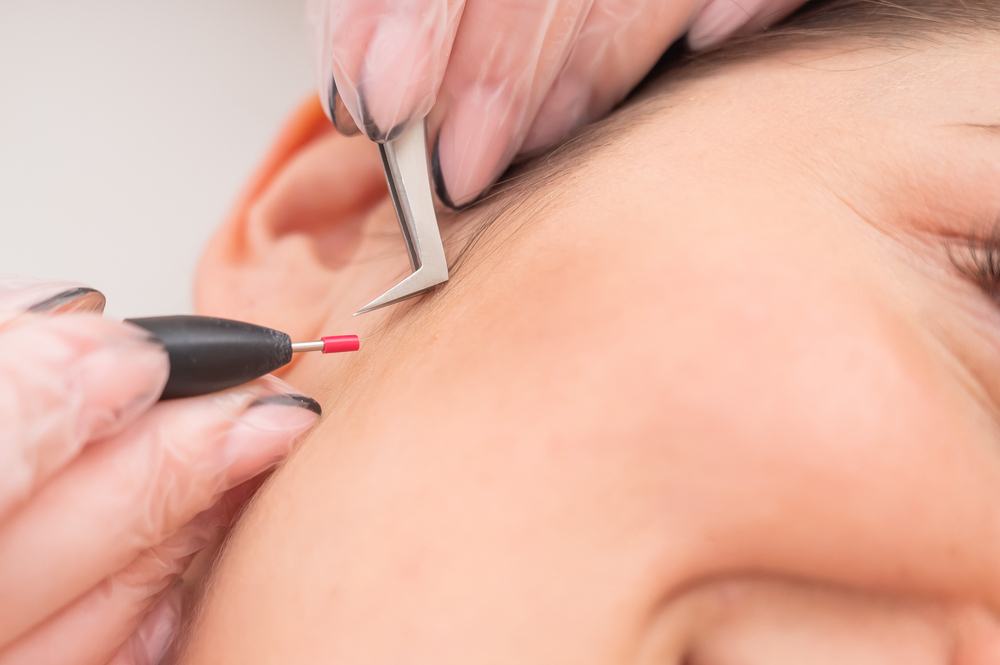
Electrolysis is a permanent hair removal method that works by targeting and destroying the hair follicle at its root—one hair at a time. It’s the only method approved by the FDA for permanent hair removal and has been safely used for over 100 years. It was first developed in 1875 by Dr Charles Michel, an ophthalmologist originally to treat ingrown eyelashes. Over time, it evolved into a permanent hair removal methoDuring treatment, a tiny, sterile probe (about the size of a hair) is inserted into the natural opening of the hair follicle. A controlled electrical current is then delivered to the follicle, destroying the growth center of the hair. The treated hair is then gently lifted out with tweezers—not pulled. Over a series of sessions, this process stops the follicle from producing hair altogether.
The Three Electrolysis Modalities
Thermolysis
Thermolysis – Alternating current (AC), sometimes referred to as high frequency or short-wave: This is a method that uses a high frequency current to produce heat in the area influenced by the current. This heat cauterizes and destroys the dermal papilla. One sterile probe is used for this type of process. Two variations of Thermolysis are “Flash” or “Automatic” Thermolysis which uses a split second impulse of current and “Manual” Thermolysis which requires several seconds at a lower intensity to achieve permanency.
Galvanic
Galvanic Electrolysis – Direct current (DC), and is called true electrolysis. This is a chemical method that utilizes a direct current to convert normal body salt and water in the follicle into a compound capable of destroying the dermal papilla. The chemical is produced only in the follicle and does not affect any other area. One probe or several probes working simultaneously can be used during this process.
Blend
The Blend Method (also referred to as Dual Modality) – The Blend method combines both currents together (sequentially or simultaneously) in the same probe. Thermolysis enhances the action of the galvanic method to produce a faster process. The best method will be selected for you based on your hair type, skin characteristics and sensitivity.
Electrolysis is a safe, permanent hair removal solution for everyone – inclusive of all hair colours, skin tones, genders and age.





FAQ
Who isn’t a good candidate for Electrolysis?
Clients who have taken Accutane (isotretinoin) must be off the medication for a minimum of one year before beginning electrolysis treatments to reduce the risk of scarring. Clients using Retinol or Retin-A must discontinue use two days before and two days after their electrolysis appointment if the treatment area is affected. A doctor’s note is required prior to starting electrolysis for clients with the following conditions or circumstances: diabetes, heart conditions, hemophilia, pacemakers, seizure disorders, organ transplants, recent surgery, or cancer-related treatments. Medical clearance is also required for clients taking immunosuppressant medications, biologic medications, high-dose or long-term corticosteroids, or certain autoimmune disease treatments.
Who is good candidate for Electrolysis?
Electrolysis is for anyone who wants permanent hair removal, regardless of:
– Skin tone (safe for all complexions, including very fair to very deep skin).
– Hair colour (unlike laser, electrolysis works on blond, red, grey, white, and fine hairs).
– Gender (ideal for all people—women, men, and non-binary individuals).
– Age (commonly done from late teens and up).
Electrolysis vs Laser: What is the difference?
Laser hair removal and electrolysis are both methods of hair removal, but they work in different ways. Laser hair removal uses concentrated beams of light to target and destroy the pigment in the hair follicles. It is most effective for individuals with light skin and dark hair. It can cover larger areas quickly but may require multiple sessions for optimal results. On the other hand, electrolysis is a method that uses a fine needle to deliver a small electrical current to each hair follicle individually. This process damages the follicle, preventing future hair growth. Electrolysis is suitable for all skin and hair types and can be used on smaller, more precise areas as well as larger areas of the body. While laser hair removal can be faster for larger areas, electrolysis is considered the only FDA-approved method for permanent hair removal. It is often recommended for smaller areas or individuals with lighter hair colours. It’s best to consult with a professional to determine which method is most suitable for your specific needs and goals.
Is it painful?
Electrolysis can cause some discomfort, but it varies from person to person. Some describe it as a stinging or pricking sensation. However, numbing creams can help minimize any potential discomfort.
What areas on the body can be treated?
How long does the process take?
The duration of the electrolysis process depends on various factors such as the size of the treatment area and the density of hair. Generally, each session can last anywhere from 15 minutes to 3 hours depending on the amount of hair being treated. Multiple sessions are usually required for optimal results.
How many treatments will I need before I’m hair free?
The number of electrolysis treatments needed to achieve hair-free results can vary from person to person. It depends on factors such as the amount of hair, hair growth cycle, and individual response to treatment. Hair grows in cycles, and electrolysis can only treat hairs in the active growth phase. Because of this, a series of sessions is needed for complete results. The number depends on the treatment area, hair type, and how consistently you come in. Many clients begin noticing significant reduction within a few months, with complete permanent removal over a longer period (commonly 12–18 months for facial areas).
How do I prep my skin before treatment?
Cleanse: Gently cleanse your skin with a mild cleanser to remove any dirt, oil, or makeup.
Avoid sun exposure: Minimize sun exposure and avoid tanning beds for at least a week before your treatment.
Skip topical products: Avoid using any creams, lotions, or skincare products on the treatment area on the day of your session.
Don’t wax or pluck: Refrain from waxing, plucking, or using depilatory creams in the treatment area for at least a week before your electrolysis appointment.
Communicate with your Electrologist: Inform your electrologist about any changes in your medical history or medications you’re taking.
What are the post care instructions?
Avoid touching: Refrain from touching or rubbing the treated area to prevent irritation or infection.
Keep it clean: Gently cleanse the treated area with a mild cleanser and lukewarm water to keep it clean.
Moisturize: Apply a soothing, fragrance-free moisturizer to hydrate the skin and promote healing.
Avoid sun exposure: Protect the treated area from direct sunlight and avoid tanning beds for a few days after the treatment.
Skip harsh products: Avoid using harsh skincare products, exfoliants, or any other treatments on the treated area for at least a week.
Don’t pick or scratch: Resist the urge to pick or scratch the treated area, as it can lead to scarring or infection.
Follow your Electrologist’s advice: Your electrologist may provide specific instructions based on your skin type and the intensity of the treatment. Follow their advice for the best results.
 Monica Cornell Beauty - West Vancouver